For small workshops and startups planning to enter the garlic deep processing field or increase production capacity, the “small garlic powder making machine price” is a crucial consideration. The market price range for a small, versatile grinding machine suitable for garlic powder production typically falls between several hundred and several thousand US dollars. This garlic powder making machine price difference is not accidental; it directly reflects the professionalism and sophistication of the equipment’s core configurations, which determine its ability to efficiently and effectively handle the challenges posed by garlic as a specific raw material. Understanding the factors behind these prices is the first step in making a wise investment decision and ensuring the production of high-quality garlic powder.
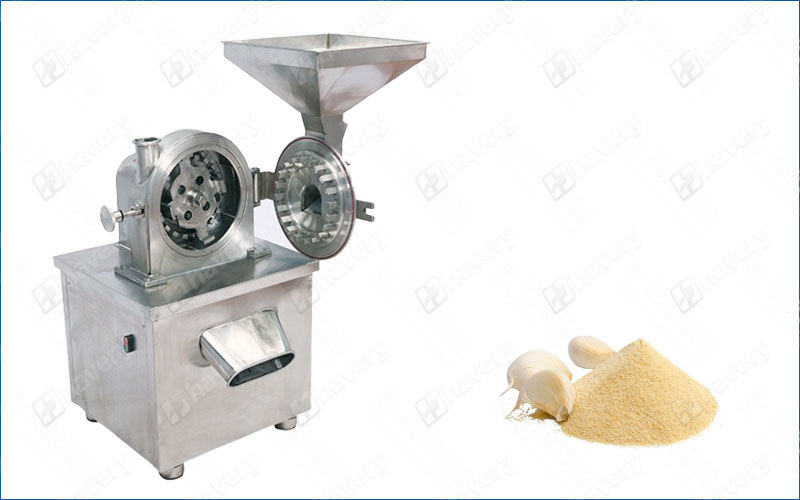
The key factors influencing the small garlic powder machine price primarily stem from how its hardware configuration specifically addresses the core challenges of garlic powder processing: how to efficiently grind dried garlic into a uniform fine powder while overcoming issues of oil content, odor residue, and potential heat sensitivity. The following will provide a detailed breakdown of these core configurations from a professional perspective.
Core Factor One: The Synergy of Motor Power and Grinding Structure – The Foundation of Efficiency and Fineness
The fineness and yield of garlic powder are directly controlled by this factor. Dried garlic is relatively hard, requiring sufficient power and a reasonable grinding method to break it down into a uniform powder.
Motor Performance: The motor power of small machines typically ranges from 1.5kW to 7.5kW. Higher-priced models are equipped with higher-power copper-core motors and provide stable torque, ensuring that they do not jam or overheat during continuous grinding of dried garlic granules, thus achieving higher single-batch efficiency. The introduction of variable frequency control (in higher-end configurations) allows for adjusting the rotational speed to adapt to the dryness of different batches of garlic and the desired powder fineness.
Grinding Mechanism Design: Universal grinding machines typically use high-speed impact grinding (consisting of movable hammers and fixed toothed rings) or a combination of blades and fine screens. For garlic powder:
Durability: The hammers or blades in high-quality machines are forged from tool steel and heat-treated, making them extremely wear-resistant. They remain sharp even after long-term use, ensuring consistent grinding efficiency and preventing a decrease in fineness due to wear. Fluid Dynamics Design: The inner walls of the grinding chamber and the air ducts are optimally designed to create a smooth airflow circulation, helping fine powder pass quickly through the sieve, preventing material accumulation and heat generation from over-grinding. This is crucial for maintaining the color and flavor of the garlic powder.
Core Factor Two: Materials, Sieves, and Sealing – Key to Hygiene, Quality Control, and Safety
Garlic powder processing has strict requirements for food hygiene, product consistency, and operational safety, and the related configurations significantly impact costs.
Contact Part Materials: The entire material channel, including the hopper, grinding chamber, and powder collection box, must be made of 304 or higher grade stainless steel that meets food hygiene standards. This is not only for corrosion resistance, but also for:
Preventing Odor Residue and Cross-Contamination: Garlic has a strong odor. The smooth, easy-to-clean surface of stainless steel ensures thorough cleaning, preventing flavor transfer between batches.
Ensuring Product Purity: Eliminating rust or metal contamination.
Improving Durability: Superior to ordinary carbon steel, resulting in a longer equipment lifespan. This is a major differentiating factor between cost-effective and inexpensive equipment.
Sieve System: The sieve directly determines the particle size uniformity of the finished powder. Professional models offer a variety of mesh sizes (such as 80 mesh to 120 mesh, suitable for most garlic powder standards) of stainless steel sieves for replacement. Price differences reflect the manufacturing precision, wear resistance, and ease of replacement of the sieves. Finer, more durable sieves cost more but guarantee long-term stable powder quality.
Sealing and Dust Control: Garlic powder is very fine and easily dispersed.
Mechanical Seal: A reliable shaft seal prevents dust leakage from the main shaft, protecting the bearings, which is a detail reflecting the durability of the equipment.
Fully Enclosed Design and Dust Collection Interface: High-quality machines are designed for fully enclosed operation and come standard with or have optional dust collection bags or interfaces for connecting to external dust collectors. This greatly improves the working environment, complies with safe production regulations, and reduces raw material waste. Highly integrated dust control solutions will increase equipment price.
Core Factor Three: Cooling System and Intelligent Control – Upgrades for Quality Assurance and Operational Convenience
These are advanced configurations that significantly improve product quality and user experience, and are hallmarks of mid-to-high-end models. Grinding Temperature Control: High-speed grinding generates heat, which can lead to the loss of volatile flavor compounds in garlic or cause the powder to clump due to slight moisture. High-end models feature a water-cooled jacket on the outer wall of the grinding chamber or incorporate a cooling air system to effectively control the grinding temperature, better preserving the natural flavor, color, and flowability of the garlic, resulting in higher-quality garlic powder.
Electrical Control and Safety:
Basic models may only have a simple on/off switch. More expensive models are equipped with a control box integrating overload protection and current indication for safer operation.
Intelligent Touch Control: Some advanced small machines even incorporate simple PLC or microcomputer control, allowing for preset grinding times and automatic pulse cleaning, improving operational precision and automation.
Conclusion
In summary, the differences in “small garlic powder making machine price” essentially reflect the differences in the equipment’s professionalism across three dimensions: “grinding efficiency and fineness control,” “hygiene standards and quality control capabilities,” and “quality assurance and operational experience.” Investing in a well-configured machine is not only about initial cost but also about long-term product competitiveness, operating costs, and production safety.
Choosing a machine means choosing the future market positioning of your garlic powder product. Clearly define your production capacity needs and target product standards, and carefully evaluate the above configuration points to find the most cost-effective solution.
We hope this in-depth analysis provides clear guidance for your purchasing decisions!
Which factor do you prioritize most when choosing a garlic powder machine? Is it the ultimate fineness of the powder, or an easy-to-clean, residue-free design? Or have you encountered other specific challenges in your actual production? We look forward to you sharing your insights or asking questions in the comments section.
If you found this article helpful, please like, save, and share it with more friends or colleagues who are interested in food processing equipment. Every interaction helps us create more relevant content.