For food processors and spice manufacturers, achieving consistently fine, flavorful, and high-quality garlic powder hinges on one critical factor: the garlic powder making machine at the heart of the production line. Understanding the working principle of this essential equipment is not merely a technical exercise; it is fundamental to optimizing product quality, yield, and operational efficiency. Unlike generic grinders, a dedicated garlic powder making machine is engineered to address the specific physical and chemical challenges posed by dried garlic, such as its fibrous structure, residual oils, and heat sensitivity. This article delves into the systematic operational principles that transform dehydrated garlic cloves into the uniform powder found on shelves worldwide.
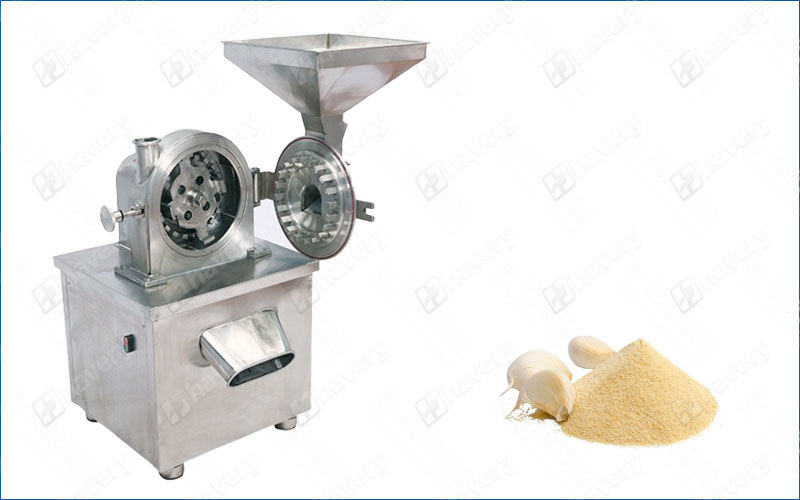
The journey within a garlic powder making machine is a sequential, multi-stage process designed for maximum efficiency and preservation of quality. The core principle revolves around precise size reduction through progressive grinding and controlled separation. A typical industrial-grade machine, such as a universal milling system, does not operate through a single action but employs a combination of mechanical forces applied in stages.
Stage 1: Feeding and Primary Size Reduction – The Coarse Breakage
The process begins with properly dried garlic cloves, which have a brittle yet slightly tough structure due to remaining fibers. The first operational stage is controlled feeding and primary crushing.
-
Principle in Action: Dried garlic cloves are fed into the machine’s chamber via a vibratory feeder or screw conveyor, ensuring a consistent and manageable flow rate. This is crucial to prevent overloading the milling mechanism. Inside the chamber, a set of high-speed rotating blades or a coarse grinding hammer assembly performs the primary impact and shear.
-
Addressing Garlic’s Characteristics: This stage exploits the brittleness of the dried garlic. The initial impact shatters the cloves into smaller, coarse particles (typically 2-5mm in size). The design here must account for the potential variation in hardness and size of the input material to ensure a steady, uniform feed to the next, more delicate stage.
Stage 2: Milling and Micronization – The Heart of Powder Production
This is the most critical phase where the coarse fragments are transformed into fine powder. The principle at work here is high-speed impact, attrition, and shearing within a contained classification system.
-
The Grinding Mechanism: The coarse particles are drawn into the main milling zone by an integrated fan or negative pressure system. Here, a high-speed rotor (often exceeding 10,000 RPM) fitted with multiple blades or hammers rotates within a precision-engineered stator or a lined grinding chamber. The particles are subjected to intense impact from the hammers, collision with the chamber walls, and violent attrition against each other.
-
Simultaneous Classification – A Key Principle: What sets an advanced garlic powder making machine apart is the integration of a dynamic air classifier or a precise screening system. As particles are ground, the generated airflow carries them toward a classifier wheel or a sieve. Particles that meet the target fineness (e.g., 80-120 mesh) are carried through by the air stream due to their lower mass. Coarser, heavier particles are rejected by the classifier’s centrifugal force or fail to pass the sieve, and are recirculated back into the grinding zone for further reduction. This closed-loop, continuous milling-and-classification principle is what guarantees a uniform particle size distribution, preventing over-grinding of fine particles which can generate excessive heat.
Stage 3: Separation and Collection – Ensuring Purity and Yield
Following micronization, the principle shifts to efficient solid-gas separation and sanitary collection.
-
Cyclonic Separation: The air-powder mixture from the milling chamber exits into a cyclone separator. The operating principle here is centrifugal force. The airflow is forced into a downward spiral; the heavier garlic powder particles settle along the walls and fall into the collection bin below, while the cleaned air is expelled.
-
Final Filtration: For ultra-fine powder or to meet stringent dust emission standards, the exhaust air may pass through a secondary filtration system, such as a bag filter. This ensures no product loss to the environment and maintains a clean workspace, which is vital given the pervasive nature of garlic dust.
Stage 4: Cooling and Preservation of Quality
An often-overlooked but vital operational principle integrated into high-quality garlic powder making machines is in-process temperature management.
-
The Need for Cooling: The high-speed mechanical action of grinding inherently generates frictional heat. Garlic powder is highly sensitive to heat, which can degrade its volatile aromatic compounds (allicin derivatives), darken its color, and promote clumping due to moisture release.
-
Cooling Principles in Practice: Advanced machines incorporate cooling strategies. These may include a water-cooled jacket around the grinding chamber to dissipate heat, or the design of the system ensures that the high-volume airflow itself acts as a coolant, quickly removing heat from the grinding zone. This principle of low-temperature grinding is essential for preserving the pungency, flavor, and bright white to off-white color that defines premium garlic powder.
Engineering Design Tailored to Garlic’s Properties
Every aspect of a garlic powder making machine‘s working principle is informed by the raw material’s nature:
-
Corrosion-Resistant Materials: Contact parts are made from food-grade stainless steel (304 or 316L). This prevents corrosion from garlic’s sulfur compounds, ensures no metallic contamination, and allows for thorough cleaning to prevent cross-contamination and odor retention.
-
Dust Containment and Safety: The entire system is hermetically sealed under negative pressure. This principle prevents powder leakage, protects bearing units from abrasive dust ingress, and safeguards operator health and safety.
-
Easy Maintenance and Sanitation: The design principle emphasizes quick disassembly for cleaning or screen/ blade changes, which is critical for food-grade production and operational uptime.
Conclusion
The working principle of a modern garlic powder making machine is a sophisticated symphony of mechanical size reduction, aerodynamic classification, and precise thermal management. It transcends simple pulverization, embodying a process engineering solution tailored to the unique challenges of dried garlic. By leveraging principles of impact, attrition, instantaneous classification, and controlled cooling, this specialized equipment ensures maximum yield of a high-quality powder with consistent granulometry, preserved bioactive compounds, and extended shelf life. For any business serious about garlic powder production, investing in a machine that correctly and efficiently executes these principles is the cornerstone of profitability and product excellence.
We hope this detailed explanation of the garlic powder making machine principle has been insightful. Do you face specific challenges in achieving the desired fineness or color in your garlic powder? Perhaps you are curious about how these principles scale for different production capacities? We invite you to share your experiences or questions in the comments section below. If you found this deep dive into industrial food processing technology valuable, please consider sharing this article with your network on LinkedIn or with colleagues in the food manufacturing industry.